

Published on July 24, 2026
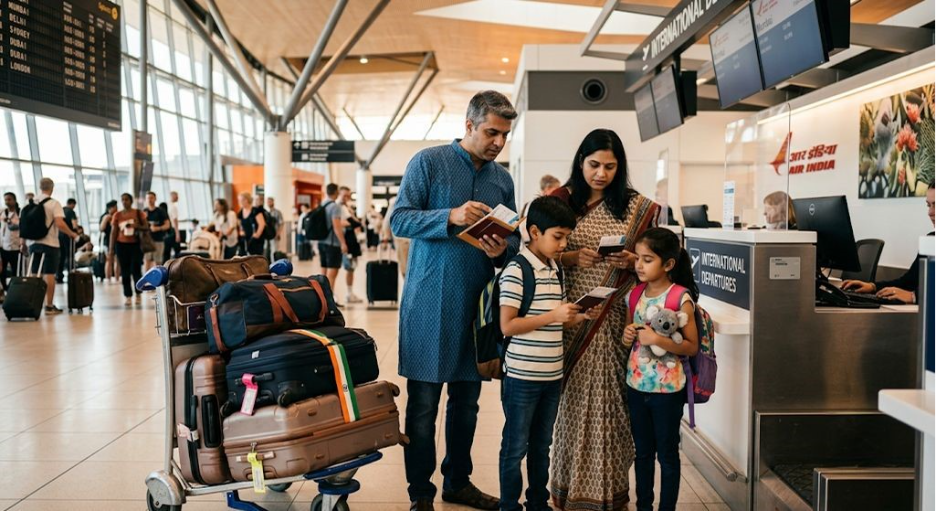
Planning a trip between Australia and India? Whether you are flying from Australia to India to visit family or heading back to Australia after your trip, understanding baggage rules for India flights is one of the most important things to get right before you travel. Get them wrong and you could face unexpected fees at the airport, delays at customs, or worse, having your belongings confiscated on arrival.
The good news is that 2026 brought significant updates to India’s baggage and customs rules, and some of the changes are actually in your favor. This guide covers everything you need to know in both directions, from luggage allowances to what you can bring through customs when you land, and what to expect when departing from Indian airports on your way back to Australia.
India Baggage Regulation Update 2026

In early 2026, the Central Board of Indirect Taxes and Customs (CBIC) implemented a massive overhaul of the country’s aviation and customs framework. Designed to dramatically speed up airport processing times, the new Baggage Rules, 2026 replaced a decade of outdated limits with higher allowances and streamlined digital clearances.
Arriving in India: Your New Duty-Free Allowances
When you cross the border into India, your luggage is assessed under a completely refreshed set of limits. The table below highlights exactly how the rules have changed for travelers:
| Category / Item | Before 2026 | From 2026 |
| Duty-Free Limit (Indian Residents & PIOs) | ₹50,000 max value | ₹75,000 max value (50% increase) |
| Jewelry Allowances | Tied to complex monetary value caps | Strict Weight-Only limits (Female: 40g / Male: 20g) |
| Brand New Laptop | Deducted from your general ₹50k limit | 1 New Laptop is fully exempt (does not touch the ₹75k limit) |
| Customs Form System | Physical paper forms distributed on the aircraft | Digital declarations via the ATITHI app or ICEGATE portal |
| Flat Duty Rate Over Limit | Tiered and complicated structure by category | Simplified flat 10% basic duty on excess personal items |
Please note that BCAS cabin baggage enforcement applies strictly when departing from India. When flying out of Australia on your way to India, the individual carry-on policy of your specific airline applies instead.
What Are the Benefits of the New Baggage Policy for International Flights to India?
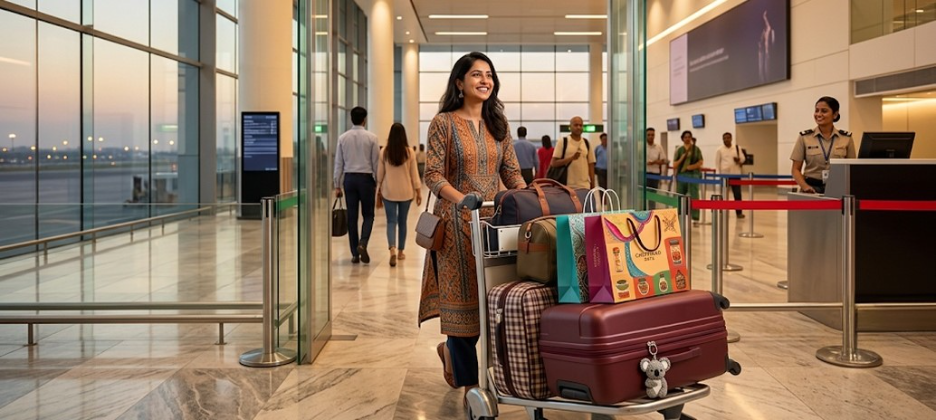
The customs side of the 2026 updates brings genuinely good news for Indian passengers arriving from Australia. Here is what changed in your favour.
Higher Duty-Free Allowance
The duty-free limit for Indian residents arriving from abroad increased from ₹50,000 to ₹ 75,000, a 50% increase effective from 2 February 2026. This means you can now bring back more goods, gifts, and purchases without paying customs duty. Foreign tourists also benefit, with their limit rising from Rs 15,000 to Rs 25,000.
Jewellery Limits Are Now Based on Weight, Not Value
Under the old rules, jewellery limits were based on monetary value, which meant passengers could unknowingly exceed the limit simply because gold prices had risen. The 2026 rules fix this by switching to a weight-based system. Female passengers who have stayed abroad for one year or more can now bring up to 40 grams of jewellery duty-free, while male passengers can bring up to 20 grams. Jewellery includes items made of gold, silver, platinum, and other precious metals. For passengers who stayed abroad for less than one year, jewellery falls within the general Rs 75,000 duty-free limit.
One New Laptop Is Now Fully Exempt
If you are 18 years or older, you can now bring one brand-new laptop into India completely duty-free. This exemption is entirely separate from your Rs 75,000 general allowance and does not reduce it in any way. Previously, a new laptop was counted within your general duty-free limit, which made it difficult to bring back other goods alongside it. This is a significant relief for NRIs and business travellers returning with a new laptop.
Simpler Flat Customs Duty Rate
If you do exceed your duty-free limit, the calculation is now simpler. Everything above Rs 75,000 is taxed at a flat 10% rate, replacing the old complicated tiered structure that varied by product category.
Digital Customs Declaration via ICEGATE
You can now file your baggage declaration digitally before you land, using the ICEGATE portal or mobile app. This replaces the old paper forms passengers had to fill out on the plane or collect at the airport on arrival. Filing digitally takes about five minutes and can significantly speed up your customs clearance. Download the ICEGATE app before your flight, fill in your declaration, save your confirmation reference number, and present it at the airport on arrival.
Airline Baggage Rules India: Luggage Allowance by Airline and Ticket Class for International Flights
Whether you are flying from Australia to India or from India back to Australia, checked baggage allowances vary significantly depending on which airline you fly and which ticket class you book. Understanding the baggage policy for international flights on each airline before you pack can save you from paying excess baggage fees on India flights at the airport. Here is what the major airlines offer on international routes between Australia and India.
Air India Baggage Allowance
For the Australia-India route, Air India operates under a regional weight concept, offering Economy passengers a checked baggage allowance of 25 kg to 35 kg depending on their fare tier (Value, Classic, or Flex). Business Class travelers receive a generous 40 kg to 45 kg allowance. The carry-on allowance aligns with standard safety regulations, permitting one cabin bag up to 7 kg for Economy and 10 kg for Business. As a full-service national carrier, Air India provides one of the most competitive and flexible international baggage guidelines for passengers flying between Australia and India.
| Class | Checked Baggage | Carry-On |
| Economy | 15 kg – 25 kg | 1 bag, 7 kg |
| Business | 30 kg – 40 kg | 1 bag, 10 kg |
Singapore Airlines Baggage Rules
As one of the premier transit choices for travelers flying between Australia and India, Singapore Airlines offers an incredibly flexible weight-based baggage system through its Changi Airport hub. Instead of restricting the number of physical bags, the airline focuses on overall weight, allowing Economy passengers between 25 kg and 30 kg depending on their specific fare type (Lite, Value, Standard, or Flexi). Premium and luxury cabins see substantial upgrades, capping out at 50 kg for First Class and Suites. Furthermore, premium cabin travelers enjoy double the carry-on allowance, ensuring plenty of space for transit necessities on multi-leg journeys.
| Class | Checked Baggage | Carry-On | Notes |
| Economy | 25 kg – 30 kg (25 kg for Lite/Value; 30 kg for Standard/Flexi) | 1 bag, 7 kg | Weight Concept: You can check multiple bags as long as their combined weight doesn’t exceed your total tier limit. |
| Premium Economy | 35 kg | 1 bag up to 7 kg | Ideal tier for long-haul transits with bonus weight capacity. |
| Business | 40 kg | 2 bags up to 7 kg each (14 kg total) | Priority baggage handling and lounge access at Changi Airport included. |
| First Class / Suites | 50 kg | 2 bags up to 7 kg each (14 kg total) |
Malaysia Airlines Baggage Policy
Malaysia Airlines operates on a flexible weight-based system for its international routes, meaning your total allowance is tied to the specific fare type you purchase. Passengers can split their weight across multiple bags, provided no single suitcase exceeds 32 kg. Business Class flyers receive a significantly higher weight cap alongside an expanded two-bag carry-on allowance
| Class / Fare Tier | Checked Baggage | Carry-On | Notes |
| Economy Lite | 10 kg | 1 bag up to 7 kg | Baseline fare; best for minimal packers. |
| Economy Value | 20 kg | 1 bag up to 7 kg | Standard allowance choice for most regular travelers. |
| Economy Flex | 30 kg | 1 bag up to 7 kg | Highest weight option for Economy tickets. |
| Business Class | 40 kg | 2 bags up to 14 kg total | Includes priority baggage handling at the airport. |
Qantas Baggage Allowance for India Routes
On the Australia-India route, Qantas utilizes a general weight-based system for its international checked baggage framework. Rather than restricting the number of physical suitcases, Economy passengers are granted a total checked allowance of up to 30 kg, which can be distributed across multiple bags as long as no single item exceeds 32 kg. Premium Economy and Business Class cabins offer an upgraded checked capacity of up to 40 kg total. For carry-on allowances, Economy travelers are permitted one cabin bag up to 7 kg, while premium passengers enjoy an expanded limit of up to 14 kg total across two pieces. However, a strict airport security policy applies on all return flights departing from India, limiting all passengers across every cabin class to just one single piece of hand luggage with no additional personal items allowed.
| Class | Checked Baggage | Carry-On | Notes |
| Economy | Up to 30 kg total | 1 bag up to 7 kg | No limit on the number of bags, provided the combined weight is under 30 kg. |
| Premium Economy | Up to 40 kg total | 2 bags up to 14 kg total (Max 10 kg per bag) | Robust weight baseline; individual bags cannot exceed 32 kg. |
| Business Class | Up to 40 kg total | 2 bags up to 14 kg total (Max 10 kg per bag) | Includes priority airport baggage handling. |
| First Class | Up to 50 kg total | 2 bags up to 14 kg total (Max 10 kg per bag) | Maximum weight capacity; single item weight must not exceed 32 kg. |
Emirates Baggage Allowance for India Routes
Emirates utilizes a general weight-based system for its international passenger routes. Instead of restricting travelers to a specific number of bags, the airline allows checked weight to be divided across multiple pieces as long as no single suitcase exceeds 32 kg. Hand baggage rules permit Economy and Premium Economy travelers one piece of cabin luggage, while Business and First Class passengers receive a dual-bag allowance totaling up to 14 kg.
| Class | Checked Baggage | Carry-On | Notes |
| Economy (Special / Saver) | 20 kg – 25 kg | 1 bag up to 7 kg | Multiple bags are allowed within your total weight limit. |
| Economy (Flex / Flex Plus) | 30 kg – 35 kg | 1 bag up to 7 kg | High checked capacity for heavy packers. |
| Premium Economy | 35 kg | 1 bag up to 10 kg | Upgraded cabin luggage weight capacity. |
| Business Class | 40 kg | 2 bags up to 14 kg total | Includes priority baggage tags and lounge access. |
| First Class | 50 kg | 2 bags up to 14 kg total | Maximum general luxury weight allowance. |
Qatar Airways Baggage Allowance for India Routes
Qatar Airways operates on a global weight-based structure for its non-Americas international routes. This model eliminates strict piece limits, permitting travelers to check multiple suitcases provided they stay within their overall weight limit. Economy cabin baggage is capped at one 7 kg piece, while premium passengers benefit from a dual-piece allotment allowing up to 15 kg of total hand luggage
| Class | Checked Baggage | Carry-On | Notes |
| Economy (Lite / Classic) | 20 kg – 25 kg | 1 bag up to 7 kg | Single piece limit applies strictly to the 7 kg carry-on. |
| Economy (Convenience / Comfort) | 30 kg – 35 kg | 1 bag up to 7 kg | Highly generous weight limits for a standard economy class. |
| Business Class | 40 kg | 2 bags up to 15 kg total | Combined weight of both carry-on pieces must fit within 15 kg. |
| First Class | 50 kg | 2 bags up to 15 kg total | No single checked bag may exceed 32 kg due to international safety laws. |
Important note on codeshare flights: When your itinerary involves codeshare legs between Australia and India, the baggage allowance follows the Most Significant Carrier rule. A booking that looks like one airline may actually apply another airline’s stricter baggage restrictions for India travel. Always check every ticket segment separately before you pack.
Baggage Restrictions India Travel: What You Still Need to Avoid
Whether you are flying from Australia to India or from India back to Australia, there are strict baggage restrictions and international baggage guidelines about what you can and cannot carry. Ignoring these baggage restrictions can lead to confiscation, fines, or delays at the airport. Here is what to watch out for in both directions.
What You Cannot Carry in Cabin Baggage
- Liquids over 100 ml, these must be in a 1-litre clear resealable bag, one per passenger
- Sharp objects including knives, scissors with blades over 6 cm, razors, and utility cutters
- Sports equipment such as golf clubs, cricket bats, and hockey sticks, these must go in checked baggage
- Any firearm, weapon, or self-defence item
- Loose lithium batteries, these must travel in the cabin and never in checked baggage
- Power banks, these must always be in cabin baggage with no exceptions, airlines will remove them from checked bags at the counter
What You Cannot Put in Checked Baggage
- Loose lithium batteries and power banks due to fire risk in aircraft holds
- Compressed gases and flammable liquids including lighter refills
- Corrosive materials such as acids, mercury, and wet cell batteries
- Explosives, ammunition, and fireworks of any kind
What You Cannot Bring Into India at All
- Unstudded precious metals such as gold bars and gold coins
- Narcotics and controlled substances
- Firearms and ammunition beyond permitted quantities
- Counterfeit goods and copyright-infringing material
Items That Still Have Fixed Limits When Arriving in India
Alcohol stays at 2 litres. Tobacco stays at 100 cigarettes, 25 cigars, or 125 grams. These limits were not changed by the 2026 regulations and remain the same for all eligible passengers arriving in India.
Avoid Excess Baggage Fees on India Flights
The easiest way to avoid excess baggage fees on India flights is to pre-book your checked baggage allowance online before departure. Most airlines charge significantly less for additional baggage when pre-booked compared to paying at the airport counter. Always weigh your bags at home before leaving for the airport, and remember that the one-bag carry-on rule at Indian airports is strictly enforced, so plan what goes in your cabin bag carefully.
Do Not Pool Your Duty-Free Allowance
If you are arriving in India from Australia with family members, remember that the ₹75,000 duty-free limit is per person and cannot be combined. Each individual passenger must stay within their own allowance.
FAQ: Baggage Rules for India Flights
You actually need to follow two sets of rules at the same time. For your checked baggage, follow your airline’s policy as each airline has its own weight allowance. For customs when you arrive in India, follow the Indian Government rules which include a duty-free limit of Rs 75,000, weight-based jewellery limits, and a full laptop exemption for passengers aged 18 and above.
When departing from any Indian airport, you must follow the BCAS rule set by the Indian Government. This means you are only allowed one cabin bag with a maximum weight of 7 kg for Economy and 10 kg for Business or First Class, with dimensions no larger than 55x40x20 cm. Your handbag, laptop bag, or large purse must fit inside that one bag and cannot be carried as a separate item.
This depends on which airline you are flying with. Air India allows 25 kg for Economy, while Singapore Airlines, Emirates, Malaysia Airlines, and Qatar Airways allow 23 kg for Economy. Business and First Class passengers generally receive between 30 and 40 kg depending on the airline. Always check directly with your airline before departure as allowances can differ by route.
No. The one cabin bag rule enforced by India’s BCAS only applies when you are departing from an Indian airport. When departing from Australia on your way to India, the cabin baggage policy of your airline applies instead, not the Indian Government standard.
Download the ICEGATE mobile app on Android or iOS, or visit the ICEGATE web portal. Fill in your declaration listing any goods exceeding ₹75,000 in value, submit it, and save your confirmation reference number. Present this at the airport on arrival and proceed through the Green Channel if your goods are within the duty-free limit.
Any goods above the ₹75,000 threshold are now taxed at a flat rate of 10% under the new 2026 framework. Keep your purchase receipts as customs officers may ask you to verify the value of new items, especially electronics, watches, and branded goods.
Always verify the latest carry-on and checked baggage policy directly with your airline before flying, as baggage policies for international flights can vary by route and ticket class. For customs rules, refer to the official Department of Revenue, Ministry of Finance, Government of India website or the ICEGATE portal for the most current information.