

Categories
Travel Guide Travel Guide to Australia

Australia Visa Fees Are Increasing: What Indian Travellers Should Know 

Australian Visa Fees

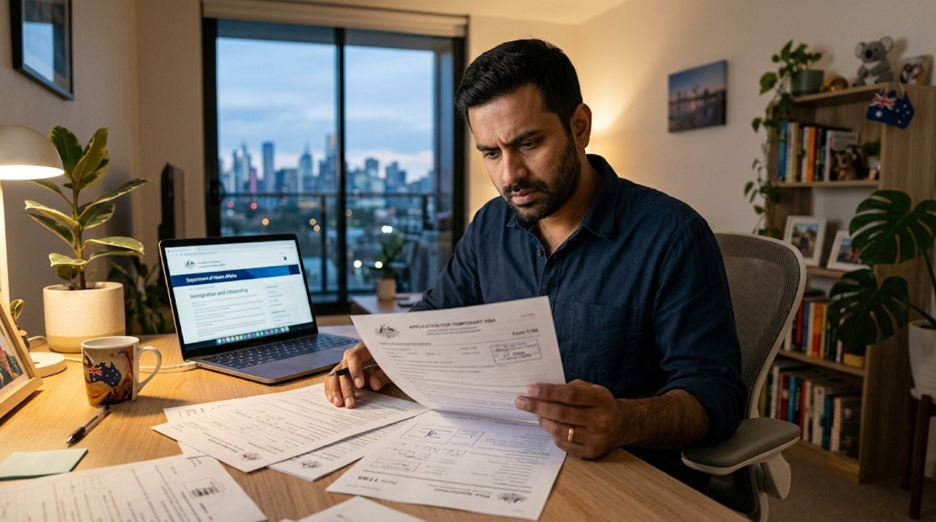
For the Indian diaspora in Australia, life often revolves around visas. There’s always something in motion: extending a current visa, applying for a new visa category for family members already here, or sponsoring loved ones back home to come and visit. So when the Australian visa fees jump suddenly, it can feel overwhelming. We understand that feeling, and that’s exactly why we’ve put together this guide, so you know exactly what’s changed and can plan ahead with confidence. 

According to the Department of Home Affairs website (immi.homeaffairs.gov.au), visa application charges increased across almost every visa category, effective 1 July 2026, as part of the broader australian visa fee increase 2026. Below, we break down Australia visa fees for Indian travellers, covering students, workers, and visitors planning to travel to or settle in Australia. 

So, how much does Australia visa cost for Indians right now? It depends on the visa category, but this guide gives you the exact numbers to work from, category by category. 

Why are the Australia visa fees going up? 

Part of the reasoning tied to the increase relates to skilled migration settings. Income thresholds used to assess skilled visa sponsorships, including the Core Skills Income Threshold (CSIT) and the Temporary Skilled Migration Income Threshold (TSMIT), rose to AUD 79,499, while the Specialist Skills Income Threshold (SSIT) rose to AUD 146,717, in line with wage growth for Australian workers, so that sponsored migrants aren’t paid less than the local workforce for the same role. Alongside these wage benchmarks, the government also lifted the visa application charges themselves as part of its broader migration settings for the 2026–27 program. 

Applications lodged before 1 July 2026 are assessed under the old fee schedule, no matter when a decision is made. Fees are locked in based on the date Home Affairs receives your application, not the date you prepare your documents, sit an English test, or get a Confirmation of Enrolment. So if you’re close to lodging, timing matters. 

Keep in mind: these are base government application charges only. They don’t include costs like medical exams, police checks, English language tests, or migration agent fees, all of which add to the total cost of your application. 

Understanding the Australia visa cost increase impact on Indian travellers matters because it changes how much you now need to set aside before you even begin your application, whether you’re studying, working, or simply visiting family. 

New Australia visa fees for Indian student passport holders 

The Student visa (Subclass 500) is one of the most significant increases for Indian nationals planning to study in Australia. 

Australia visa cost for Indians
Student Visa Category Old Fee (before 1 July 2026) New Fee (from 1 July 2026) 
Standard Subclass 500 (primary applicant) AUD 2,000 AUD 2,500 
ELICOS / Non-Award sector students N/A AUD 2,050 
Temporary Graduate visa (Subclass 485) AUD 4,600 AUD 5,750 

This is the second consecutive yearly increase to the Subclass 500 fee. It had already risen from AUD 1,600 to AUD 2,000 the year before. The 485 Temporary Graduate visa has climbed even more sharply, effectively increasing around two and a half times since early 2026 across two separate hikes. 

What this means for Indian students: on top of tuition and living-cost requirements, the visa charge is now a much bigger line item to budget for upfront, and it’s non-refundable even if your application is refused. If you’re planning to study in Australia, it’s worth locking in your application as early as your documentation allows, since a rushed, incomplete application risks paying the fee twice. 

Some concessions still apply. Eligible citizens of Pacific Island countries, Timor-Leste, and certain ASEAN countries may qualify for reduced pricing. This generally does not apply to Indian passport holders, but it’s worth checking your eligibility on the official Visa Pricing Estimator before you lodge. 

New Australia visa fees for Indian worker passport holders 

Skilled and employer-sponsored visas, the pathways most relevant to Indian professionals working or planning to work in Australia, also saw substantial increases. 

Skilled/Work Visa Category Old Fee (before 1 July 2026) New Fee (from 1 July 2026) 
Skilled Independent (Subclass 189) AUD 4,910 AUD 6,135 
Skilled Nominated/Regional (190/491/494) and Employer Nomination (186) N/A AUD 6,135–6,140 
Skills in Demand visa (Subclass 482, all streams) AUD 3,210 AUD 4,015 
482 additional applicant (partner/adult dependant) N/A AUD 4,015 
482 additional applicant (child under 18) N/A AUD 1,005 

What this means for Indian professionals: for families applying together under a skilled pathway (primary applicant plus partner and children), the combined government fees can now add up to well over AUD 13,000, before any migration agent, skills assessment, or English test costs. 

If you’re applying for a partner or family visa alongside your work visa, note that the Partner visa (Subclass 820/801 or 309/100) base charge also rose sharply, from AUD 9,365 to AUD 11,710, with additional applicant charges of AUD 5,860 for those 18 and over, and AUD 2,935 for children under 18. 

New Australia visa fees for Indian visitor passport holders 

If you’re planning a family visit, holiday, or business trip to Australia, the Visitor visa (Subclass 600) fees have also gone up from 1 July 2026. 

Visitor Visa Category Old Fee (before 1 July 2026) New Fee (from 1 July 2026) 
Tourist stream (offshore application) AUD 200  AUD 250 
Onshore visitor applications N/A AUD 630 
Frequent Traveller stream N/A AUD 1,845  
eVisitor (Subclass 651, for eligible passports) Free Free (unchanged) 
ETA (Subclass 601, for eligible passports) AUD 20 AUD 20 (unchanged) 

What this means for Indian visitors: since Indian passport holders aren’t eligible for the free eVisitor or the low-cost ETA (those are reserved for a limited list of passports), most Indian travellers applying to visit family in Australia will pay the standard Tourist stream charge. The good news is that, compared to the jumps in student and skilled visa fees, this increase is relatively modest in absolute terms. 

If you’re applying while already inside Australia (for example, extending a stay to spend more time with family), be aware the onshore application charge is considerably higher than applying from India. Where possible, it’s worth applying for the length of stay you actually need before you travel, rather than planning to extend once you’ve arrived. 

Also budget separately for Overseas Visitor Health Cover (OVHC) if your visa carries Condition 8501, which requires visitors to hold adequate health insurance for the duration of their stay. This is a separate cost from the visa application charge itself. 

Our advice: plan early, budget wider 

Whether you’re a student heading to Melbourne, a skilled worker preparing a sponsorship application, a family planning to reunite in Australia, or simply visiting loved ones for a holiday, the biggest takeaway from this update is simple: build the visa fee into your budget early, and don’t wait until the last minute to lodge. 

These new Australia visa fees for Indian passport holders touch every stage of the journey, from the first student visa application through to skilled work, family reunion, and holiday visits. If you’re still asking how much Australia visa fees in 2026 are, the short answer is that it depends on your visa type and stream, but the tables above give you concrete figures to plan around. 

Fee estimates can vary depending on your specific visa stream, passport, and family composition, so always confirm your exact charge using the official Visa Pricing Estimator before you apply. 

I already submitted my application before 1 July 2026. Will I be charged the new fee?  

No. Your application is assessed under the fee schedule that applied on the date Home Affairs received it, regardless of when a decision is made. If you lodged before 1 July 2026, you pay the old fee. 

How much is the Australia student visa fee for Indian applicants 2026?  

The standard Subclass 500 fee is AUD 2,500 for most applicants, up from AUD 2,000. ELICOS and Non-Award sector students pay a lower AUD 2,050. 

How much is the skilled visa fee for Indian workers 2026?  

The Subclass 189 (Skilled Independent) fee rose to AUD 6,135, and the Subclass 482 (Skills in Demand) fee rose to AUD 4,015 for the primary applicant. Fees for 190, 491, 494, and 186 sit in a similar AUD 6,135 to 6,140 range. 

How much is the Australia visitor visa fee for Indian applicants 2026?  

The standard Tourist stream fee is AUD 250 for offshore applications, up from AUD 200. Applying while already in Australia costs more, at AUD 630. 

Is the visa fee refunded if my application is refused? 

No. Visa application charges are non-refundable, even if the application is refused. This makes it worth preparing a complete, accurate application the first time rather than risking a rushed one. 

Do these fees include health insurance, medical exams, or English tests?  

No. The figures above are government application charges only. Costs like medical exams, police checks, English language tests, Overseas Visitor Health Cover, and migration agent fees are all separate and add to the total. 

Where can I check the exact fee for my specific situation?  

Use the official Visa Pricing Estimator on the Department of Home Affairs website. It calculates the exact charge based on your passport, visa subclass, stream, and family members included. 

This article is for general informational purposes and reflects visa pricing published by the Department of Home Affairs as at July 2026. Visa fees and policy settings can change. Always confirm current pricing directly with Home Affairs before lodging your application.

Categories
Travel Guide Travel Guide to India

7 Essential Baggage Rules for India Flights: Your 2026 Guide

7 Essential Baggage Rules for India Flights: Your 2026 Guide

Traveling back home to India brings immense emotional joy. However, packing gifts for your family can cause stress. Therefore, understanding the exact baggage rules for India flights is incredibly important. Consequently, you can avoid paying expensive excess baggage fees. Moreover, proper planning gives you ultimate peace of mind. Let us help you prepare for a joyful family reunion. 

What Are the Standard Baggage Rules for India Flights? 

Generally, the standard baggage rules for India flights permit one carry-on bag weighing up to 7kg. Additionally, economy class passengers usually receive a checked baggage allowance between 25kg and 30kg. However, these limits vary significantly depending on your specific airline. Therefore, you must strictly check prohibited item lists before packing your luggage. Consequently, your airport check-in process becomes fast and completely stress-free. 

The 7 Golden Rules for Packing Your Luggage 

Global aviation security updates strictly dictate what you can carry. Below, you will find the seven most important international baggage guidelines. 

1. Weigh Your Carry On Baggage Strictly 

First, your cabin bag must easily fit in the overhead bin. Furthermore, carry on baggage India flights usually cannot exceed 7kg. Therefore, you should keep your valuables and essential medicines here. Additionally, airlines enforce strict size limits to ensure passenger safety. Consequently, you must verify your specific cabin class allowance before packing. 

Standard Carry-On Luggage Limits: 

Cabin Class Maximum Weight Size Limitations (H x L x W) Total Dimensions 
Economy & Premium Economy 7 kg / 15 lb 55 cm x 40 cm x 20 cm Max 115 cm / 45 in 
First & Business Class 10 kg / 22 lb 55 cm x 40 cm x 20 cm Max 115 cm / 45 in 
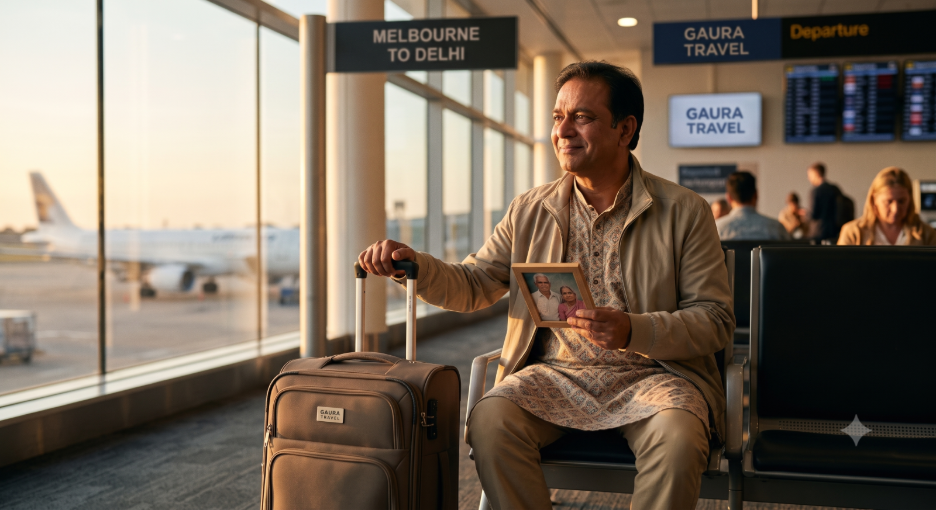
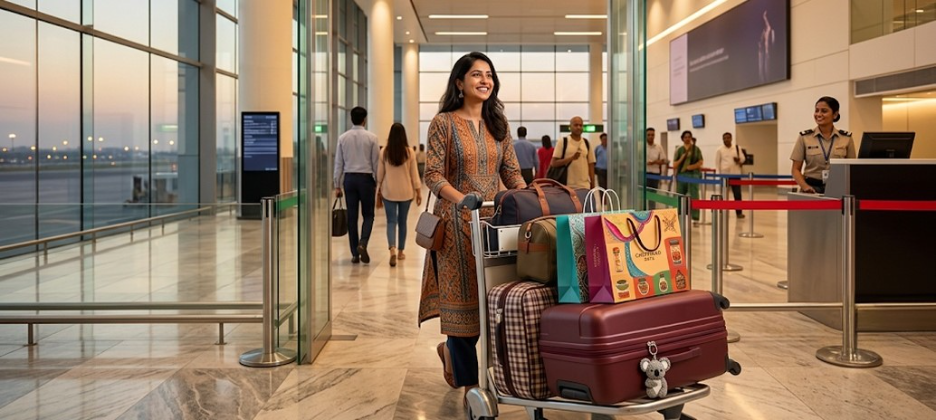
A heartwarming, cinematic 35mm photograph of an Indian traveler at the airport looking nostalgically while holding his perfectly sized 7kg carry-on suitcase, illustrating the importance of following baggage rules for India flights to ensure a smooth and emotional family reunion.

2. Maximize Your Checked Luggage Allowance 

Next, checked baggage holds your clothes and heavy family gifts. Moreover, economy class baggage India flights usually allow 25kg to 30kg. Consequently, you must precisely weigh your bags at home. Fortunately, this massive allowance fits approximately 70 to 120 clothing items. Therefore, you can comfortably pack a complete wardrobe for several weeks. 

Packing Estimate for 25kg to 30kg Allowance: 

  • Tops (150g – 250g each): 15 to 20 shirts, blouses, or long sleeves. 
  • Bottoms (500g – 800g each): 8 to 10 jeans, skirts, or slacks. 
  • Outerwear (1kg – 2.5kg each): 3 to 5 heavy coats or rain jackets. 
  • Footwear (700g – 1.5kg each): 3 to 5 pairs of formal shoes or sneakers. 
  • Essentials: 20+ sets of underwear, socks, belts, and scarves. 
A heartwarming, cinematic view of a large open suitcase meticulously packed with neatly folded shirts, jeans, coats, and shoes, sitting next to a framed family photo. An Indian traveler gently places a colorful traditional garment inside, perfectly organizing the luggage to comply with baggage rules for India flights ahead of an emotional family reunion. 

3. Never Pack Prohibited Items 

However, flammable liquids and sharp objects are strictly banned. Furthermore, you cannot pack heavy lithium batteries in checked bags. Ultimately, dangerous chemicals will trigger immediate security alerts. Therefore, you must follow international security guidelines to prevent stressful airport delays. Specifically, authorities carefully monitor liquids, sharp tools, and highly flammable materials. 

Strict Baggage Security Guidelines: 

  • Flammable Materials: Gasoline, paint thinners, and fireworks are completely banned. However, you can generally carry one standard personal lighter on your person. 
  • Alcohol Regulations: You can pack alcohol (24% to 70% ABV) inside checked luggage. Furthermore, the absolute limit is 5 liters per passenger in retail packaging. 
  • Sharp Objects: Knives, scissors, and razor blades are strictly banned from cabins. Consequently, you must securely wrap and place these tools inside checked bags. 
  • Liquids & Aerosols (LAGs): Cabin liquids must stay under 100 ml per container. Moreover, they must fit neatly inside one transparent, resealable 1-liter plastic bag. 
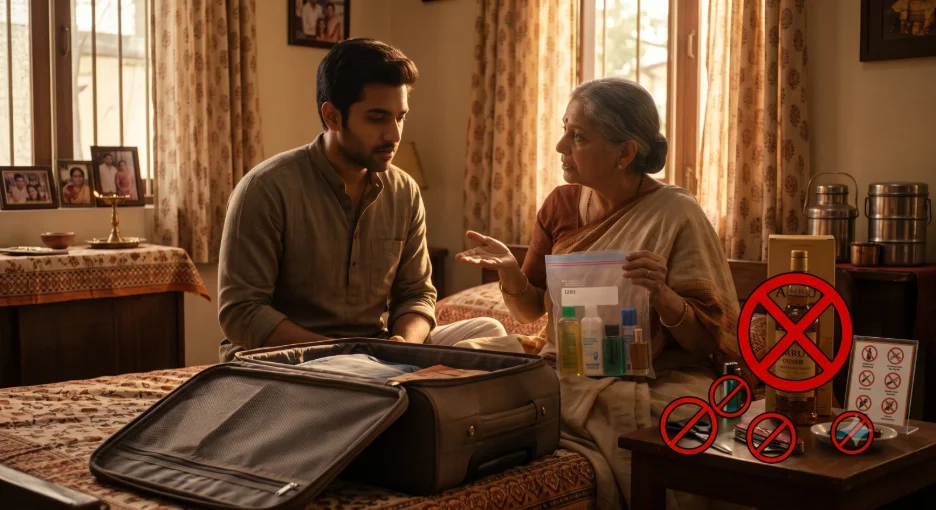
A heartwarming, cinematic photo of an Indian mother gently explaining baggage rules for India flights to her pensive son, holding a clear bag of liquids (LAGs) and pointing to separate checked luggage items like sharp tools and alcohol in their cozy home. 

4. Pack Food Items Correctly 

Many travelers ask if they can bring food. Can I carry food in checked baggage to India? Yes, you certainly can. However, it must be commercially sealed, dry, and non-perishable. Furthermore, the Central Board of Indirect Taxes and Customs India strictly prohibits fresh agricultural products. Therefore, you must follow specific packing guidelines carefully. 

Food Packing Guidelines for India: 

  • Allowed Items: You can safely pack factory-sealed snacks, sweets, chocolates, tea, coffee, and dry biscuits. 
  • Prohibited Items: However, you must never pack fresh produce, unprocessed meats, or homemade cooked meals. 

5. Understand Baggage Transfer During Transit 

Additionally, navigating baggage transfer during transit is quite easy. If you book a single continuous ticket, your bags transfer automatically. Therefore, connecting flight baggage rules remain completely stress-free. However, you must understand your specific ticket type and transit airport. 

Connecting Flight Baggage Rules: 

  • Ticket Types: Single tickets transfer luggage automatically to the final destination. Conversely, separate tickets require you to manually collect and re-check bags. 
  • First Port of Entry: Arriving internationally, Indian aviation guidelines dictate claiming baggage and clearing customs at your first Indian airport. 
  • you must claim baggage and clear customs at your first Indian airport. 
  • Cabin Limits: Moreover, Indian carriers strictly enforce a 7kg limit and 55cm Ã— 35cm Ã— 25cm dimensions for cabin bags. 
  • Survival Kit: Therefore, always keep passports, medications, and electronics inside your cabin bag. 
  • Minimum Connecting Time: Lastly, Delhi Airport authorities note that successful transits typically require roughly 90 minutes. 

6. Utilize Baby and Student Allowances 

  • Family travel to India requires smart packing strategies. Usually, baby baggage allowance international flights includes a free stroller. Similarly, student baggage allowance India sometimes offers extra weight. Therefore, you should utilize these excellent benefits to save money. 

Baby & Infant Baggage Allowances: 

  • Checked Luggage: Infants under two generally receive a 10kg allowance in Economy class. 
  • Free Strollers: Furthermore, airlines let you check one fully collapsible stroller completely free of charge. 
  • Gate-Checking: Consequently, you can wheel compact strollers straight to the aircraft door easily. For exact rules, always consult with Gaura Travel Expert. 

Student Baggage Allowances: 

Airline Student Benefit Requirements 
Air India Up to 40 kg or two 23 kg pieces. Valid student ID or letter. 
Singapore Airlines 40 kg total checked baggage allowance. KrisFlyer Student Privileges registration. 
Qatar Airways Extra 10 kg and up to 20% discount. Qatar Airways Student Club membership. 

7. Pre-Book Excess Baggage Early 

Finally, traveling with extra luggage is entirely possible. However, you must purchase extra weight online before arriving at the airport. Consequently, you will successfully avoid massive penalty fees. Therefore, you should always handle this step early through the airline’s website. Moreover, no single bag can ever exceed 32kg. 

How to Pre-Purchase Extra Baggage: 

  • Qantas: Visit “Manage Booking” up to three hours prior to your departure. 
  • Air India: Pre-pay via “Manage Booking” or call their customer centers directly. 
  • Singapore Airlines: Secure discounted blocks up to 48 hours before your flight. 
  • Malaysia Airlines: Purchase extra weight online up to 24 hours before departure. 
  • Low-Cost Carriers: Purchase weight slabs (5kg, 10kg, 15kg) roughly 2 to 6 hours before flying. 

Comparing Airline Baggage Rules India 

Gaura Travel partners with the world’s most trusted airlines. Therefore, we guarantee a safe and comfortable journey home. Below, review the specific luggage limits for our partners. 

Trusted Airline Economy Checked Baggage Premium Economy Carry-On Limit 
Singapore Airlines 25kg – 30kg 35kg 7kg 
Qantas 30kg 40kg 7kg 
Malaysia Airlines 20kg – 30kg 35kg 7kg 
Air India 25kg (Varies by route) 35kg 8kg 

Book Your Dream Family Reunion Effortlessly 

Gaura Travel proudly boasts 18 years of dedicated experience. Therefore, we handle complex airline luggage restrictions for you. Moreover, our 24/7 customer support team connects in under 6 seconds. Consequently, your journey home is always fully protected. 

Additionally, you can secure cheap flights to India easily. Indeed, our flexible layby option requires only a $5 deposit. Therefore, you can save your money for buying amazing gifts. Do not let complex baggage rules delay your trip. Ultimately, your family is eagerly waiting for your arrival.

 Frequently Asked Questions (FAQ) 

What is the baggage limit for India flights?  

Generally, standard economy class passengers can check in between 25kg and 30kg. However, the exact weight limit strictly depends on your airline. Therefore, always check your ticket details before packing. 

Can I carry food in checked baggage to India?  

Yes, you can certainly carry food in your checked luggage. However, it must be commercially packaged, dry, and non-perishable. Therefore, you can safely bring favorite snacks for your family. 

How does baggage work on connecting flights?  

If you book your flights on a single continuous ticket, the airline handles it. Therefore, your baggage transfers automatically during your transit. Consequently, you do not collect it during your layover. 

Can I add extra baggage after booking?  

Yes, most trusted airlines allow you to purchase extra baggage. However, buying it online before your flight is always cheaper. Therefore, we highly recommend planning your packing needs early. 

Do airlines check baggage weight strictly?  

Yes, all international airlines check baggage weight very strictly. Consequently, exceeding the limit results in high excess baggage fees. Therefore, you should always weigh your bags accurately at home. 

Categories
Travel Guide Travel Guide to Australia Travel Guide to India

Baggage Rules for India Flights: What Travelers Need to Know 

checked baggage India flights 

Planning a trip between Australia and India? Whether you are flying from Australia to India to visit family or heading back to Australia after your trip, understanding baggage rules for India flights is one of the most important things to get right before you travel. Get them wrong and you could face unexpected fees at the airport, delays at customs, or worse, having your belongings confiscated on arrival. 

The good news is that 2026 brought significant updates to India’s baggage and customs rules, and some of the changes are actually in your favor. This guide covers everything you need to know in both directions, from luggage allowances to what you can bring through customs when you land, and what to expect when departing from Indian airports on your way back to Australia. 

India Baggage Regulation Update 2026

baggage rules for India flights

In early 2026, the Central Board of Indirect Taxes and Customs (CBIC) implemented a massive overhaul of the country’s aviation and customs framework. Designed to dramatically speed up airport processing times, the new Baggage Rules, 2026 replaced a decade of outdated limits with higher allowances and streamlined digital clearances. 

Arriving in India: Your New Duty-Free Allowances 

When you cross the border into India, your luggage is assessed under a completely refreshed set of limits. The table below highlights exactly how the rules have changed for travelers: 

Category / Item Before 2026 From 2026 
Duty-Free Limit (Indian Residents & PIOs) â‚¹50,000 max value â‚¹75,000 max value (50% increase) 
Jewelry Allowances Tied to complex monetary value caps Strict Weight-Only limits (Female: 40g / Male: 20g
Brand New Laptop Deducted from your general ₹50k limit 1 New Laptop is fully exempt (does not touch the ₹75k limit) 
Customs Form System Physical paper forms distributed on the aircraft Digital declarations via the ATITHI app or ICEGATE portal 
Flat Duty Rate Over Limit Tiered and complicated structure by category Simplified flat 10% basic duty on excess personal items 

Please note that BCAS cabin baggage enforcement applies strictly when departing from India. When flying out of Australia on your way to India, the individual carry-on policy of your specific airline applies instead. 

What Are the Benefits of the New Baggage Policy for International Flights to India? 

economy class baggage India 

The customs side of the 2026 updates brings genuinely good news for Indian passengers arriving from Australia. Here is what changed in your favour. 

Higher Duty-Free Allowance 

The duty-free limit for Indian residents arriving from abroad increased from â‚¹50,000 to â‚¹ 75,000, a 50% increase effective from 2 February 2026. This means you can now bring back more goods, gifts, and purchases without paying customs duty. Foreign tourists also benefit, with their limit rising from Rs 15,000 to Rs 25,000. 

Jewellery Limits Are Now Based on Weight, Not Value 

Under the old rules, jewellery limits were based on monetary value, which meant passengers could unknowingly exceed the limit simply because gold prices had risen. The 2026 rules fix this by switching to a weight-based system. Female passengers who have stayed abroad for one year or more can now bring up to 40 grams of jewellery duty-free, while male passengers can bring up to 20 grams. Jewellery includes items made of gold, silver, platinum, and other precious metals. For passengers who stayed abroad for less than one year, jewellery falls within the general Rs 75,000 duty-free limit. 

One New Laptop Is Now Fully Exempt 

If you are 18 years or older, you can now bring one brand-new laptop into India completely duty-free. This exemption is entirely separate from your Rs 75,000 general allowance and does not reduce it in any way. Previously, a new laptop was counted within your general duty-free limit, which made it difficult to bring back other goods alongside it. This is a significant relief for NRIs and business travellers returning with a new laptop. 

Simpler Flat Customs Duty Rate 

If you do exceed your duty-free limit, the calculation is now simpler. Everything above Rs 75,000 is taxed at a flat 10% rate, replacing the old complicated tiered structure that varied by product category. 

Digital Customs Declaration via ICEGATE 

You can now file your baggage declaration digitally before you land, using the ICEGATE portal or mobile app. This replaces the old paper forms passengers had to fill out on the plane or collect at the airport on arrival. Filing digitally takes about five minutes and can significantly speed up your customs clearance. Download the ICEGATE app before your flight, fill in your declaration, save your confirmation reference number, and present it at the airport on arrival. 

Airline Baggage Rules India: Luggage Allowance by Airline and Ticket Class for International Flights 

Whether you are flying from Australia to India or from India back to Australia, checked baggage allowances vary significantly depending on which airline you fly and which ticket class you book. Understanding the baggage policy for international flights on each airline before you pack can save you from paying excess baggage fees on India flights at the airport. Here is what the major airlines offer on international routes between Australia and India. 

Air India Baggage Allowance 

For the Australia-India route, Air India operates under a regional weight concept, offering Economy passengers a checked baggage allowance of 25 kg to 35 kg depending on their fare tier (Value, Classic, or Flex). Business Class travelers receive a generous 40 kg to 45 kg allowance. The carry-on allowance aligns with standard safety regulations, permitting one cabin bag up to 7 kg for Economy and 10 kg for Business. As a full-service national carrier, Air India provides one of the most competitive and flexible international baggage guidelines for passengers flying between Australia and India. 

Class Checked Baggage Carry-On 
Economy 15 kg – 25 kg 1 bag, 7 kg 
Business 30 kg – 40 kg 1 bag, 10 kg 

Singapore Airlines Baggage Rules 

As one of the premier transit choices for travelers flying between Australia and India, Singapore Airlines offers an incredibly flexible weight-based baggage system through its Changi Airport hub. Instead of restricting the number of physical bags, the airline focuses on overall weight, allowing Economy passengers between 25 kg and 30 kg depending on their specific fare type (Lite, Value, Standard, or Flexi). Premium and luxury cabins see substantial upgrades, capping out at 50 kg for First Class and Suites. Furthermore, premium cabin travelers enjoy double the carry-on allowance, ensuring plenty of space for transit necessities on multi-leg journeys. 

Class Checked Baggage Carry-On Notes 
Economy 25 kg – 30 kg (25 kg for Lite/Value; 30 kg for Standard/Flexi) 1 bag, 7 kg Weight Concept: You can check multiple bags as long as their combined weight doesn’t exceed your total tier limit. 
Premium Economy 35 kg 1 bag up to 7 kg Ideal tier for long-haul transits with bonus weight capacity. 
Business 40 kg 2 bags up to 7 kg each (14 kg total) Priority baggage handling and lounge access at Changi Airport included. 
First Class / Suites 50 kg 2 bags up to 7 kg each (14 kg total)  

Malaysia Airlines Baggage Policy 

Malaysia Airlines operates on a flexible weight-based system for its international routes, meaning your total allowance is tied to the specific fare type you purchase. Passengers can split their weight across multiple bags, provided no single suitcase exceeds 32 kg. Business Class flyers receive a significantly higher weight cap alongside an expanded two-bag carry-on allowance 

Class / Fare Tier Checked Baggage Carry-On Notes 
Economy Lite 10 kg 1 bag up to 7 kg Baseline fare; best for minimal packers. 
Economy Value 20 kg 1 bag up to 7 kg Standard allowance choice for most regular travelers. 
Economy Flex 30 kg 1 bag up to 7 kg Highest weight option for Economy tickets. 
Business Class 40 kg 2 bags up to 14 kg total Includes priority baggage handling at the airport. 

Qantas Baggage Allowance for India Routes 

On the Australia-India route, Qantas utilizes a general weight-based system for its international checked baggage framework. Rather than restricting the number of physical suitcases, Economy passengers are granted a total checked allowance of up to 30 kg, which can be distributed across multiple bags as long as no single item exceeds 32 kg. Premium Economy and Business Class cabins offer an upgraded checked capacity of up to 40 kg total. For carry-on allowances, Economy travelers are permitted one cabin bag up to 7 kg, while premium passengers enjoy an expanded limit of up to 14 kg total across two pieces. However, a strict airport security policy applies on all return flights departing from India, limiting all passengers across every cabin class to just one single piece of hand luggage with no additional personal items allowed. 

Class Checked Baggage Carry-On Notes 
Economy Up to 30 kg total 1 bag up to 7 kg No limit on the number of bags, provided the combined weight is under 30 kg. 
Premium Economy Up to 40 kg total 2 bags up to 14 kg total (Max 10 kg per bag) Robust weight baseline; individual bags cannot exceed 32 kg. 
Business Class Up to 40 kg total 2 bags up to 14 kg total (Max 10 kg per bag) Includes priority airport baggage handling. 
First Class Up to 50 kg total 2 bags up to 14 kg total (Max 10 kg per bag)  Maximum weight capacity; single item weight must not exceed 32 kg. 

Emirates Baggage Allowance for India Routes 

Emirates utilizes a general weight-based system for its international passenger routes. Instead of restricting travelers to a specific number of bags, the airline allows checked weight to be divided across multiple pieces as long as no single suitcase exceeds 32 kg. Hand baggage rules permit Economy and Premium Economy travelers one piece of cabin luggage, while Business and First Class passengers receive a dual-bag allowance totaling up to 14 kg.   

Class Checked Baggage Carry-On Notes 
Economy (Special / Saver) 20 kg – 25 kg 1 bag up to 7 kg Multiple bags are allowed within your total weight limit. 
Economy (Flex / Flex Plus) 30 kg – 35 kg 1 bag up to 7 kg High checked capacity for heavy packers. 
Premium Economy 35 kg 1 bag up to 10 kg Upgraded cabin luggage weight capacity. 
Business Class 40 kg 2 bags up to 14 kg total Includes priority baggage tags and lounge access. 
First Class 50 kg 2 bags up to 14 kg total Maximum general luxury weight allowance. 

Qatar Airways Baggage Allowance for India Routes 

Qatar Airways operates on a global weight-based structure for its non-Americas international routes. This model eliminates strict piece limits, permitting travelers to check multiple suitcases provided they stay within their overall weight limit. Economy cabin baggage is capped at one 7 kg piece, while premium passengers benefit from a dual-piece allotment allowing up to 15 kg of total hand luggage 

Class Checked Baggage Carry-On Notes 
Economy (Lite / Classic) 20 kg – 25 kg 1 bag up to 7 kg Single piece limit applies strictly to the 7 kg carry-on. 
Economy (Convenience / Comfort) 30 kg – 35 kg 1 bag up to 7 kg Highly generous weight limits for a standard economy class. 
Business Class 40 kg 2 bags up to 15 kg total Combined weight of both carry-on pieces must fit within 15 kg. 
First Class 50 kg 2 bags up to 15 kg total No single checked bag may exceed 32 kg due to international safety laws. 

Important note on codeshare flights: When your itinerary involves codeshare legs between Australia and India, the baggage allowance follows the Most Significant Carrier rule. A booking that looks like one airline may actually apply another airline’s stricter baggage restrictions for India travel. Always check every ticket segment separately before you pack. 

Baggage Restrictions India Travel: What You Still Need to Avoid 

Whether you are flying from Australia to India or from India back to Australia, there are strict baggage restrictions and international baggage guidelines about what you can and cannot carry. Ignoring these baggage restrictions can lead to confiscation, fines, or delays at the airport. Here is what to watch out for in both directions. 

What You Cannot Carry in Cabin Baggage 

  • Liquids over 100 ml, these must be in a 1-litre clear resealable bag, one per passenger 
  • Sharp objects including knives, scissors with blades over 6 cm, razors, and utility cutters 
  • Sports equipment such as golf clubs, cricket bats, and hockey sticks, these must go in checked baggage 
  • Any firearm, weapon, or self-defence item 
  • Loose lithium batteries, these must travel in the cabin and never in checked baggage 
  • Power banks, these must always be in cabin baggage with no exceptions, airlines will remove them from checked bags at the counter 

What You Cannot Put in Checked Baggage 

  • Loose lithium batteries and power banks due to fire risk in aircraft holds 
  • Compressed gases and flammable liquids including lighter refills 
  • Corrosive materials such as acids, mercury, and wet cell batteries 
  • Explosives, ammunition, and fireworks of any kind 

What You Cannot Bring Into India at All 

  • Unstudded precious metals such as gold bars and gold coins 
  • Narcotics and controlled substances 
  • Firearms and ammunition beyond permitted quantities 
  • Counterfeit goods and copyright-infringing material 

Items That Still Have Fixed Limits When Arriving in India 

Alcohol stays at 2 litres. Tobacco stays at 100 cigarettes, 25 cigars, or 125 grams. These limits were not changed by the 2026 regulations and remain the same for all eligible passengers arriving in India. 

Avoid Excess Baggage Fees on India Flights 

The easiest way to avoid excess baggage fees on India flights is to pre-book your checked baggage allowance online before departure. Most airlines charge significantly less for additional baggage when pre-booked compared to paying at the airport counter. Always weigh your bags at home before leaving for the airport, and remember that the one-bag carry-on rule at Indian airports is strictly enforced, so plan what goes in your cabin bag carefully. 

Do Not Pool Your Duty-Free Allowance 

If you are arriving in India from Australia with family members, remember that the â‚¹75,000 duty-free limit is per person and cannot be combined. Each individual passenger must stay within their own allowance. 

FAQ: Baggage Rules for India Flights 

If I am flying from Australia to India, which baggage rules do I need to follow? 

You actually need to follow two sets of rules at the same time. For your checked baggage, follow your airline’s policy as each airline has its own weight allowance. For customs when you arrive in India, follow the Indian Government rules which include a duty-free limit of Rs 75,000, weight-based jewellery limits, and a full laptop exemption for passengers aged 18 and above. 

If I am flying back to Australia from India, what rules apply to my cabin bag? 

When departing from any Indian airport, you must follow the BCAS rule set by the Indian Government. This means you are only allowed one cabin bag with a maximum weight of 7 kg for Economy and 10 kg for Business or First Class, with dimensions no larger than 55x40x20 cm. Your handbag, laptop bag, or large purse must fit inside that one bag and cannot be carried as a separate item. 

How many kilos of baggage can I bring from Australia to India?   

This depends on which airline you are flying with. Air India allows 25 kg for Economy, while Singapore Airlines, Emirates, Malaysia Airlines, and Qatar Airways allow 23 kg for Economy. Business and First Class passengers generally receive between 30 and 40 kg depending on the airline. Always check directly with your airline before departure as allowances can differ by route. 

Does the one cabin bag rule apply when I depart from Australia? 

No. The one cabin bag rule enforced by India’s BCAS only applies when you are departing from an Indian airport. When departing from Australia on your way to India, the cabin baggage policy of your airline applies instead, not the Indian Government standard. 

How do I file a customs declaration digitally before arriving in India? 

Download the ICEGATE mobile app on Android or iOS, or visit the ICEGATE web portal. Fill in your declaration listing any goods exceeding ₹75,000 in value, submit it, and save your confirmation reference number. Present this at the airport on arrival and proceed through the Green Channel if your goods are within the duty-free limit. 

What happens if I exceed the ₹75,000 duty-free limit? 

Any goods above the ₹75,000 threshold are now taxed at a flat rate of 10% under the new 2026 framework. Keep your purchase receipts as customs officers may ask you to verify the value of new items, especially electronics, watches, and branded goods. 

Where can I verify the latest airline baggage rules for India?  

Always verify the latest carry-on and checked baggage policy directly with your airline before flying, as baggage policies for international flights can vary by route and ticket class. For customs rules, refer to the official Department of Revenue, Ministry of Finance, Government of India website or the ICEGATE portal for the most current information. 

Categories
Food & Culture

Go Home for Mum’s Cooking: Why Home Cooked Indian Meals Bring Us Together

home cooked Indian meals

Living in Australia offers wonderful opportunities for many diaspora members. However, nothing compares to the comforting taste of home cooked Indian meals. We deeply understand this powerful emotional connection to Indian food. Therefore, Gaura Travel is here to help you return to your roots. 

How Home Cooked Indian Meals Spark Deep Family Reunions 

Why is food important in Indian culture? Indian food brings families together because flavors act as a bridge to sacred childhood memories. Moreover, sharing traditional dishes reinforces cultural identity during family reunions in India. Therefore, coming home to enjoy a mother’s cooking heals the ache of missing Indian food abroad. 

Ultimately, food represents much more than physical nourishment. Because it carries stories across generations, it builds lasting emotional security. Therefore, returning home to India is a journey back to a safe haven. 

A warm, candid image of a three-generation Indian family gathered around a wooden dining table in a cozy home. A smiling mother serves a steaming thali of traditional home cooked indian meals to her family, reflecting an emotional reunion and deep connection through food.

Nostalgic Indian Dishes That Define Our Heritage 

India is a massive country with incredibly diverse culinary traditions. Consequently, every region offers unique flavors that NRIs desperately crave. Furthermore, search engines and food lovers continuously celebrate these rich menus. Let us explore the specific nostalgic Indian dishes that call you back home. 

The Hearty Flavors of North India 

North Indian cuisine is famous worldwide for its rich textures. However, eating it at a restaurant never equals eating it at home. For instance, nothing beats a steaming plate of Chole Bhature on a Sunday morning. Additionally, a simple bowl of Rajma Chawal can instantly cure your homesickness. Moreover, winter trips are completely incomplete without Sarson Ka Saag. Because your mother prepares these home cooked Indian meals perfectly, the taste is unmatched. 

A heartwarming North Indian mother lovingly serving her diaspora son a steaming thali of authentic home cooked Indian meals on a cozy Sunday morning, featuring Chole Bhature, Rajma Chawal, and Sarson Ka Saag, illustrating the emotional connection and unmatched taste of a family reunion. 

The Soul-Warming Tastes of South India 

South Indian kitchens produce some of the most comforting aromas globally. First, the smell of freshly fermented batter is purely magical. Furthermore, biting into a crispy Medu Vada brings immediate joy. If you feel unwell, a hot bowl of Tamarind Rasam provides instant healing. Additionally, weekend gatherings often feature fragrant Hyderabadi Biryani. Ultimately, finishing your meal with sweet Payasam completes the perfect dining experience. 

Embracing Authentic Indian Recipes from Mom 

Every single spice in your mother’s kitchen carries a beautiful story. Consequently, eating together helps heal the quiet loneliness of living across the ocean. Your mother prepares these dishes with unconditional love. Therefore, nothing can ever replace her magical touch. Exploring authentic Indian recipes from mom brings unmatched comfort to your soul. For example, hot rotis straight from the tawa represent pure love. Ultimately, reproducing these home cooked Indian meals in Australia is extremely difficult. 

Dealing with Reverse Culture Shock Indian Food Dynamics 

When returning home to India, your palate might experience a sudden surprise. Additionally, you might experience a unique reverse culture shock Indian food adjustment. However, your heart instantly melts when you taste that first bite. Because flavor is the ultimate language of belonging, you feel completely secure. Furthermore, your stomach might need time to adjust to rich gravies. Therefore, start your trip with lighter home cooked Indian meals like Khichdi. Eventually, you can dive into heavier dishes and vibrant street foods safely. 

Flying to India for Festivals: A Culinary Celebration 

Are you planning on flying to India for festivals this year? Because festivals represent the peak of culinary traditions, they are the best time to visit. Moreover, family celebrations always revolve around massive, collaborative cooking sessions. 

  • Diwali Delights: Houses smell like sweet cardamom and ghee. Therefore, eating fresh Gulab Jamun becomes mandatory. 
  • Eid Feasts: The celebration is totally incomplete without slow-cooked Mutton Biryani. Consequently, neighbors and friends gather happily. 
  • Holi Treats: Colorful festivals require joyful and sweet foods. Thus, sharing Gujiya creates unforgettable family memories. 

Ultimately, enjoying these festive home cooked Indian meals is why we travel globally. 

Travel Planning: Finding the Best Airlines to Fly to India 

Are you dreaming of tasting your favorite hometown dishes again? Gaura Travel makes your journey entirely effortless. Because we possess 18 years of experience, we provide ultimate peace of mind. Additionally, our trusted network helps you find the best airlines to fly to India safely. We proudly partner with premium carriers like Singapore Airlines, Qantas, Malaysia Airlines, and Air India.  
We want you to enjoy genuine home cooked Indian meals without any financial worry. Therefore, craving those warm dinners will soon be a distant memory. 

Simple Preparation for Your Next Family Reunion 

We offer flexible payment options like a $5 deposit to help your cash flow. Moreover, our 24/7 customer support team can connect you in under 6 seconds. Let us look at the ideal preparation steps for your travel. 

Travel Step Strategic Focus Emotional Goal 
Pre-Booking Secure a flexible layby with a $5 deposit. Protect your budget while planning. 
In-Flight Fly comfortably with premium airline partners. Arrive rested and ready to celebrate. 
Arrival Understand custom rules for bringing items. Sit down safely for your first family dinner. 

Frequently Asked Questions (FAQ) 

Why is food important in Indian culture and family life?  

Food serves as the spiritual heart of Indian hospitality. Therefore, preparing home cooked Indian meals is an expression of deep respect and love. Moreover, it helps families pass down rich traditions to the younger generation. 

What food to bring back from India to Australia after a trip?

You must follow strict Australian border rules. However, you can bring commercially packed spices and sealed sweets. Always declare everything carefully on your passenger card. Fresh home cooked Indian meals are strictly prohibited. 

How does Gaura Travel support families traveling back to India?  

We simplify your entire flight booking process. Consequently, you can focus entirely on enjoying precious family reunions in India. Our dedicated team is always available to assist you 24/7. Ultimately, we ensure your journey back to those nostalgic meals is totally seamless. 

Categories
Travel Guide Travel Guide to India

The Ultimate Guide to Transit Rules in Singapore and Kuala Lumpur 

The ultimate guide to transit rules in Singapore & Kuala Lumpur

Going home to India is always a deeply magical experience. You simply cannot wait to hug your family. However, long haul flights to India usually require a stopover. Therefore, understanding the transit rules in Singapore and Kuala Lumpur is absolutely essential. We want your family reunion to begin completely stress-free. 

What Are the Transit Rules in Singapore and Kuala Lumpur? 

Generally, you do not need a transit visa for Singapore or Kuala Lumpur. This rule applies if your layover is strictly under 24 hours. Furthermore, you must remain inside the international transit area. Additionally, airlines automatically transfer your baggage if you book a single itinerary. 

Knowing exact airport transit requirements saves you valuable time. Consequently, you can focus on relaxing with your family. Next, let us explore specific layover rules for India flights. 

Singapore Changi Airport Transit Rules 

Flying with Singapore Airlines guarantees a remarkably smooth journey. First, do Australians need a transit visa for Singapore? Fortunately, Australian citizens never require a visa for short transits. Similarly, Indian passport holders enjoy completely visa-free airside transits. However, this specifically applies if your layover stays under 24 hours. Furthermore, your baggage must transfer automatically to your final destination. 

Singapore Transit Visa Guidelines: 

  • Airside Transit: You can comfortably stay inside the transit zone without a visa on single continuous tickets. 
  • 96-Hour VFTF: Additionally, Indian nationals holding valid Australian visas qualify for the 96-Hour Visa-Free Transit Facility. Therefore, you can explore the beautiful city during longer layovers safely. 
A heartwarming, cinematic photograph of a multi-generation Indian family from Australia resting and sharing a loving, nostalgic moment together at Singapore Changi Airport (SIN) during transit, covered under the 'transit rules in Singapore and Kuala Lumpur' blog article. An elderly grandfather is telling a story to his grandson, with the family waiting patiently before their flight back to India, surrounded by their travel bags. Soft golden light illuminates the scene, and subtle airport signs are visible in the background. 

Kuala Lumpur International Airport Transit (KLIA) 

Alternatively, you might fly with Malaysia Airlines or AirAsia. Therefore, understanding Kuala Lumpur transit rules is highly crucial. Generally, airside transits under 24 hours remain entirely visa-free. However, booking separate tickets completely changes your transit requirements. Specifically, changing terminals manually forces you to clear Malaysian immigration immediately. 

KLIA Transit & Visa Rules: 

  • Through-Ticket Transit: Single PNR bookings allow completely stress-free airside transits without any visa requirements. 
  • Self-Transfer: However, switching from KLIA1 to KLIA2 requires manual baggage collection. Consequently, Indian citizens must secure a valid transit visa beforehand. 
  • Transit Without Visa (TWOV): Fortunately, the Immigration Department of Malaysia offers a generous 120-hour Transit Pass for Indian nationals. Specifically, you must hold a valid Australian visa and fly approved carriers.  
  • Arrival Card (MDAC): Finally, exiting the secure airside zone requires submitting a Malaysia Digital Arrival Card. Therefore, you must complete this online within three days before arriving. 
Emotional young Indian adults huddle and connect in the Kuala Lumpur International Airport transit area, a vital junction for diaspora travelers navigating transit rules in Singapore and Kuala Lumpur before family reunions in India.

Comparing Hubs: Is Singapore or Kuala Lumpur Better for Transit? 

Choosing between these two amazing hubs depends on your needs. For instance, traveling with elderly parents requires extra comfort. Thus, reviewing this international transit guide helps you decide easily. 

Feature Singapore Changi Airport Kuala Lumpur (KLIA) 
Trusted Airline Partners Singapore Airlines, Qantas Malaysia Airlines, Batik Air 
Transit Visa Required? No (If staying airside) No (If staying airside) 
Baggage Transfer Automatic on single tickets Automatic on single tickets 
Family Friendliness Excellent (Cinemas, gardens) Good (Jungle boardwalk, lounges) 

How to Survive Long Layovers with Your Loved Ones 

Connecting flights to India can be quite exhausting. Consequently, knowing family transit airport tips is vital. Next, let us share exactly how to prepare for long layovers. 

  • Keep travel documents for transit flights in a small bag. 
  • Overnight layover tips include booking a comfortable transit hotel. 
  • Research airport lounges for families before you depart. 
  • Finally, always stay hydrated during your airport transfer process. 

Ensuring a Smooth Journey Home: Transit Rules in Singapore and Kuala Lumpur 

Navigating international connecting flight rules does not have to be intimidating. By preparing your documents and understanding the airport layout, you avoid unnecessary stress. Therefore, you can preserve your energy for what truly matters. Ultimately, your focus should remain entirely on the joyful family reunion waiting for you in India. Whether your journey includes a layover in Malaysia or Singapore, understanding their specific entry and transit policies ensures a hassle-free trip. Below are the essential guidelines to keep in mind: 

Kuala Lumpur, Malaysia Transit & Visa Guidelines: 

  • Transit (No Visa Required): You do not need a transit visa if you remain entirely within the airport premises and continue your journey to the next destination on the same flight. 
  • Multiple Entry Visa: Eligible for Indian citizens at a fee of RM100.00. It is valid for 1 year, allowing a maximum stay of 30 days per entry (no extensions). Applicants must show proof of sufficient funds and a confirmed return ticket. (Note: Tour groups are not eligible). 
  • Single Entry Visa: Issued for a standard social visit, valid for a single entry within 3 months from the date of issue. 
  • Tip: You can check your eligibility and apply for an eVISA via the official Malaysian Immigration portal (www.imi.gov.my). 

Singapore Transit Guidelines: 

  • Qualifying as a Transit Traveller: Singapore is open to all transit travellers with no specific regulations, provided you travel to your next destination without clearing Singapore arrival immigration. 
  • Baggage & Low-Cost Carriers: If your booked flight requires you to enter Singapore to collect tickets, retrieve baggage, or check-in again (common with some Low-Cost Carriers), you are not considered a transit traveller. You must then clear immigration and fulfill all standard “Entering Singapore” public health and entry requirements. Always verify your baggage transfer status with your airline. 
  • Destination Country Requirements: Transit travellers must fulfill the entry requirements of their final destination. Please note that pre-departure COVID-19 testing services are not available in the Changi Airport transit area, so ensure all health documents are prepared before your initial departure. 

Frequently Asked Questions (FAQ) 

Do I need a transit visa for Singapore or Malaysia if I have an Indian passport?  

No, Indian citizens generally do not need a transit visa for Singapore or Kuala Lumpur. However, you must stay within the international transit area. Additionally, your total layover time must be strictly under 24 hours. 

How does baggage transfer work during transit to India?  

If you book your Australia to India flights on a single ticket, airlines transfer your baggage automatically. Therefore, you do not need to collect your bags during transit. You will safely collect them at your final destination. 

Can I leave the airport during transit in Kuala Lumpur or Singapore?  

Yes, but you must pass through the official airport transit immigration process. Consequently, you will need a valid entry visa. Alternatively, you must meet the specific Visa Free Transit Facility requirements for that particular country. 

What happens during connecting flights if my first flight is delayed?  

If you booked a single itinerary, the airline will automatically rebook you on the next available flight. Usually, ground staff will assist you directly at the transfer desk. Therefore, you will still reach your destination safely.Â